


The State Gazette The palace’s paper
Leader signs three laws before breakfast
Parliament, the streets and the Club were all improved by lunch, the palace confirms.
 Play free
A satirical card game · free in your browser
Democracy is a card game, and you are dealing. Pack the Court. Buy the front pages. Keep the generals fed. You lay your cards face down; so does the Opposition. And any card you lay can blow up in your face.
Real games, as the papers printed them


The country fights back
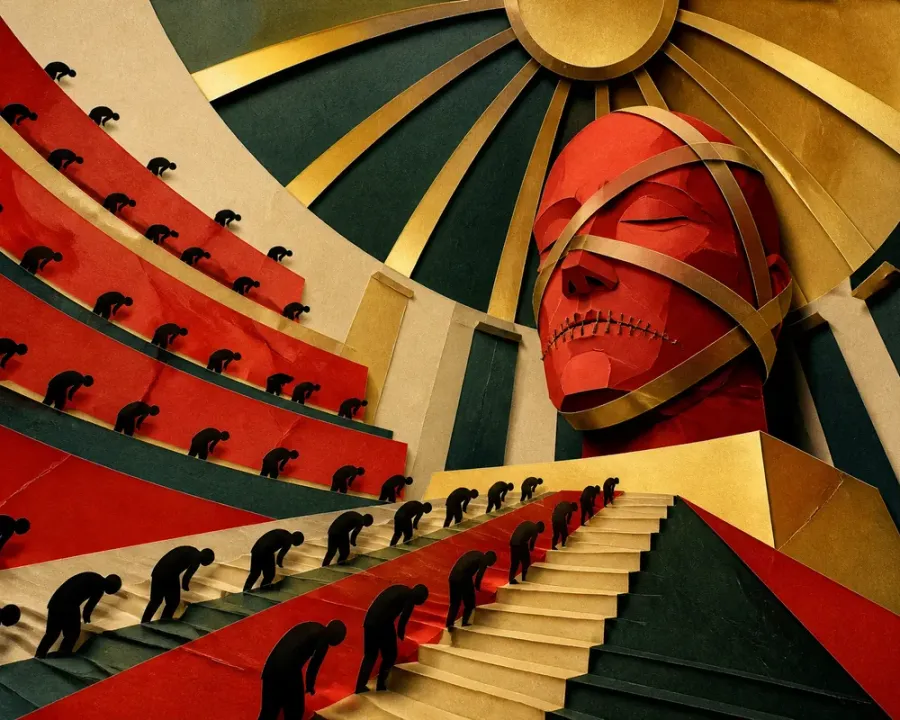
An editor with a source in your cabinet. A judge who reads the constitution for pleasure. A speaker who loves procedure more than power. An organiser who can empty a city by Monday. They lay their cards face down, as you do.
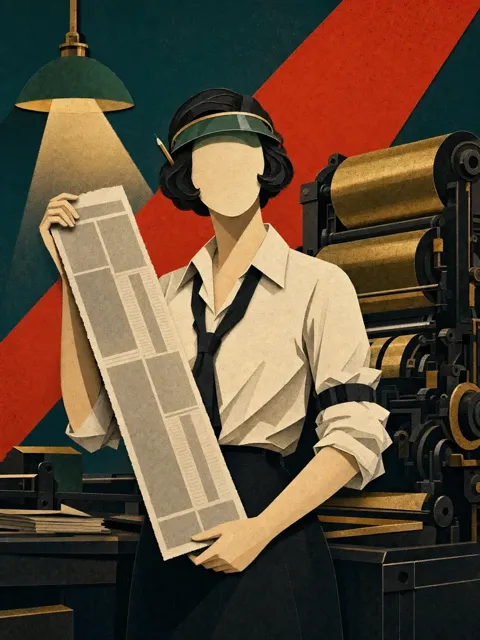
Editor, The Clarion
“We print the procurement records on Thursday. All of them.”
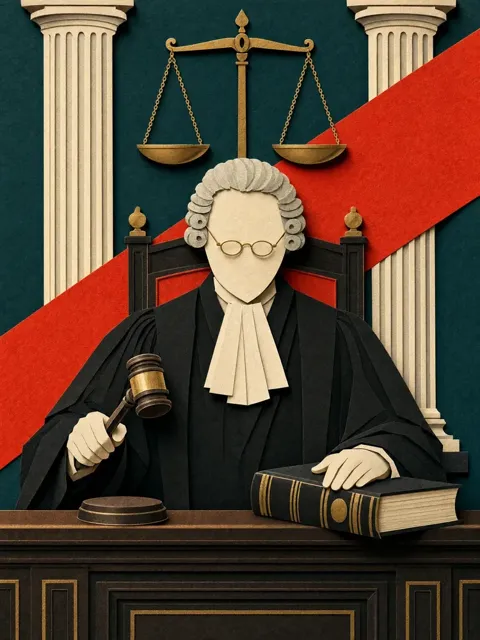
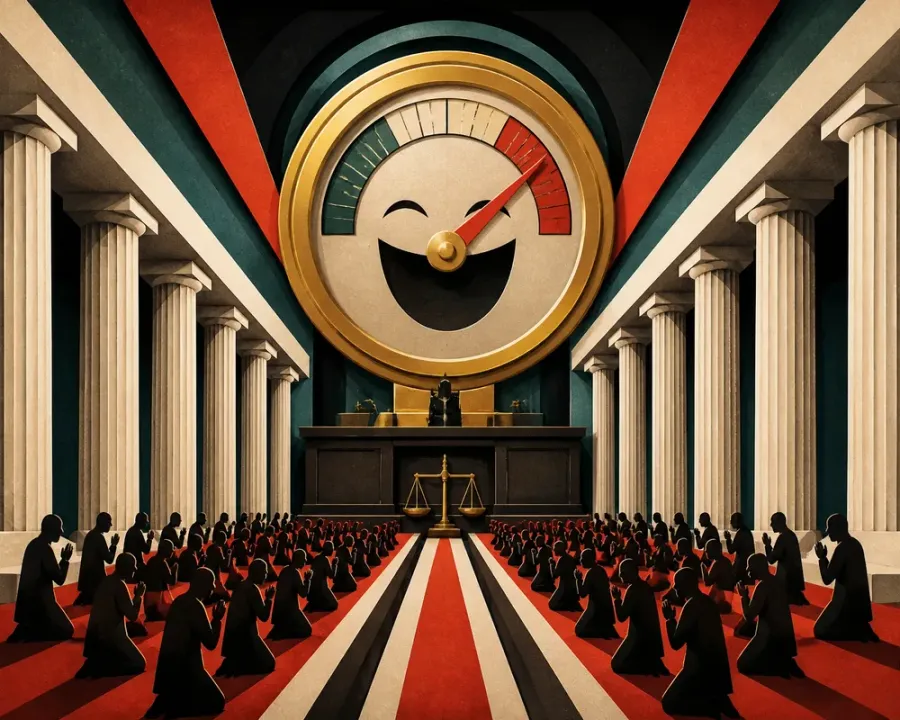
Chief Justice
“Emergencies must be real. The Court will ask for evidence of this one.”
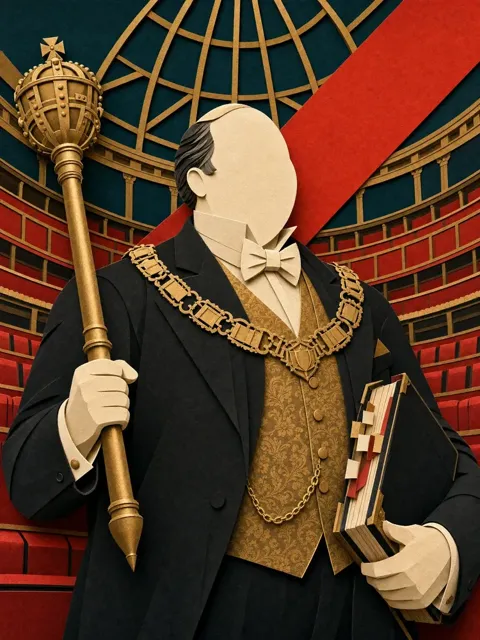
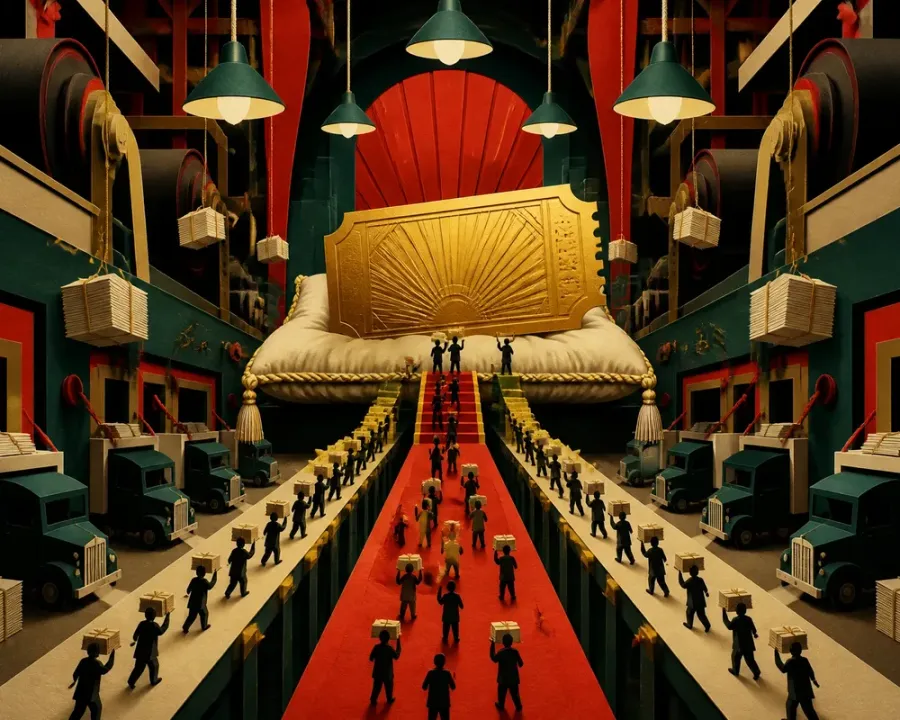
Speaker of Parliament
“A motion of no confidence has been tabled. It needs a simple majority. We have counted.”
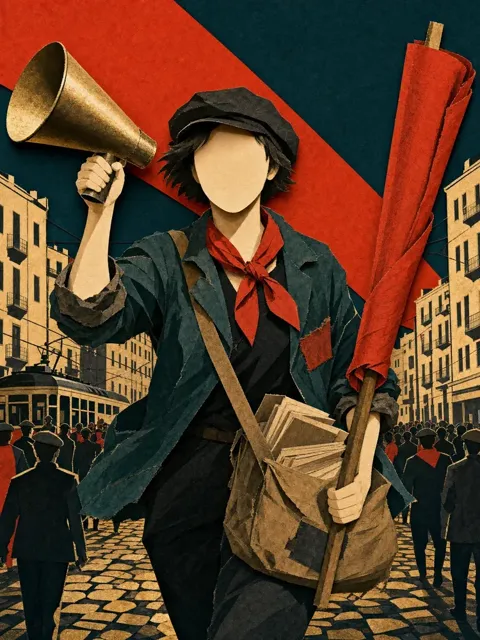
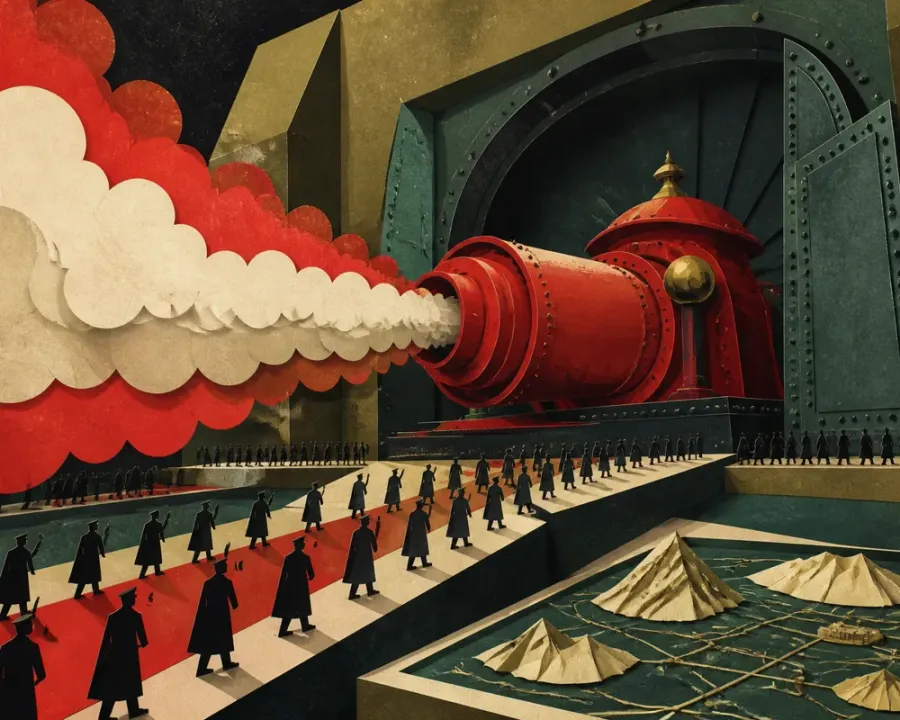
Organiser
“On Monday nobody works. Not the trams, not the bakeries, not your ministries.”
Swipe to meet all four →
255 cards · 432 cut-paper pictures
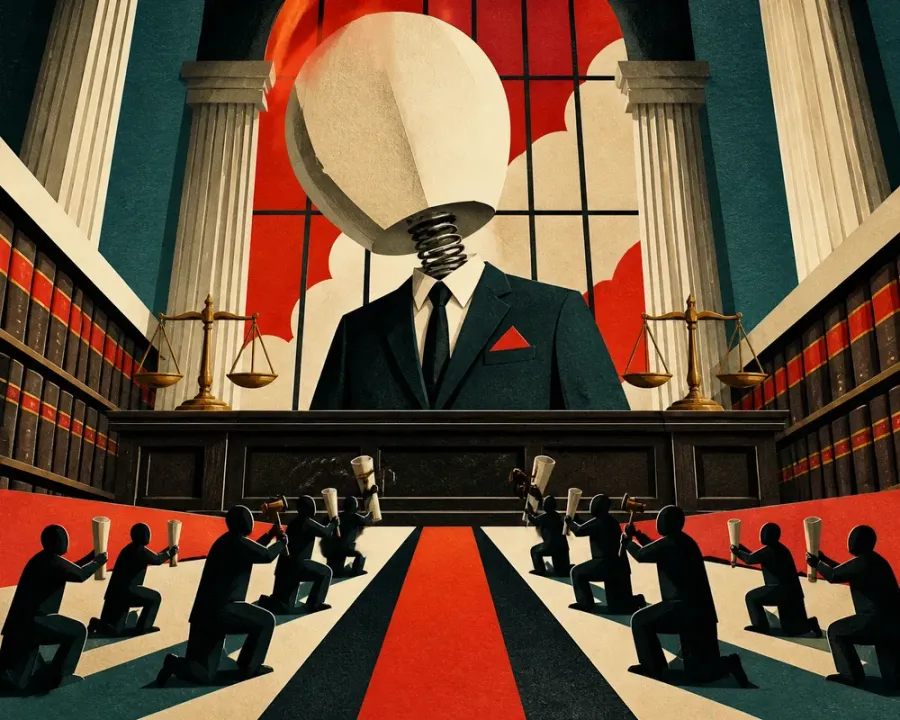
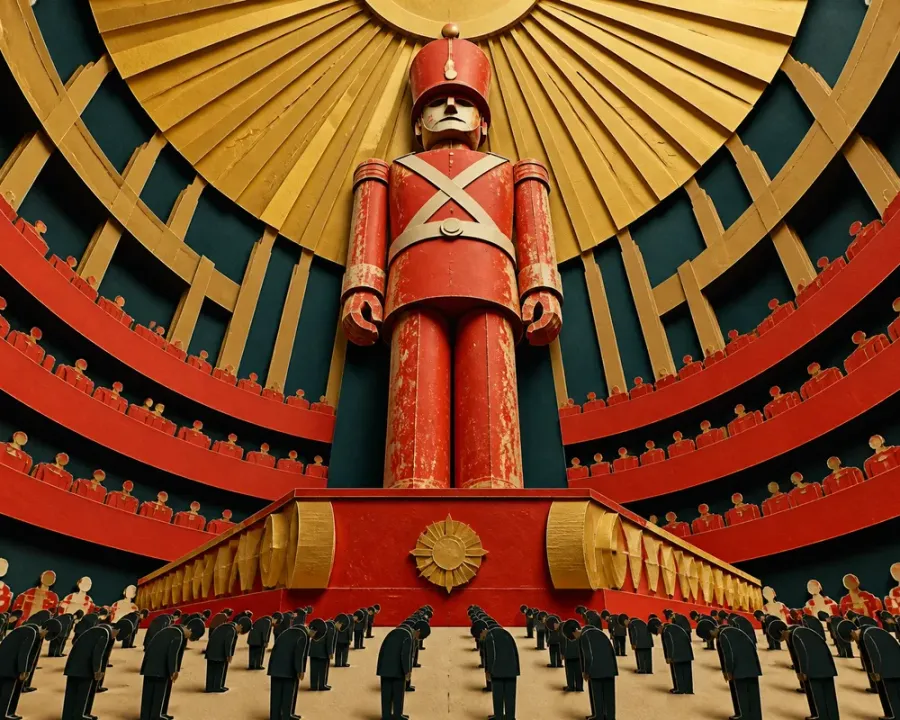
Swipe through all five →
Five of 432. The rest are classified until you play them.
Twelve ways it ends
Pick the regime you would like to be remembered for: the polite one, the rich one, the invisible one, the loud one, the permanent emergency or the iron fist. Then find out who remembers it differently. Every ending comes with a real country that tried it first, and what stopped them.
Win an ambition and the deck built for it opens: six ways to rule.
The twelfth ending is sealed. Nobody has held on long enough to open it.
Six ways to rule
Every strongman starts with the same Playbook. Win an ambition and the regime you built becomes a deck of its own: new cards, a new Executive Order, and a little extra $FIAT for doing it again. What is inside stays classified until you have earned the clearance.
A little of everything
The press, the courts, a crisis or two. Everything the textbooks warn about, in roughly the order they warn about it.
Its own cards · 3
Fast-track Executive Order
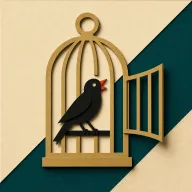
Portraits, pledges, applause
Nobody is arrested. Everybody claps. The portraits are voluntary, and on every wall.
Its own cards · 10
9 of them classified
Plausible deniability Executive Order
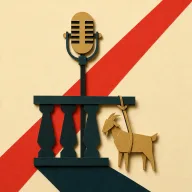
The leader and the enemy
The people adore you. The enemy is everywhere, which is handy.
Its own cards · 11
10 of them classified
Mass rally Executive Order
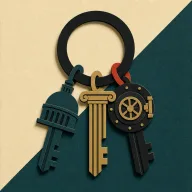
Courts, banks, contracts
Every court, bank and ministry: perfectly legal, and perfectly yours.
Its own cards · 6
5 of them classified
Entrench Executive Order
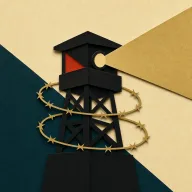
Police, camps and curfews
Curfew at nine. Confessions by ten. Order, at last.
Its own cards · 10
9 of them classified
Crackdown Executive Order
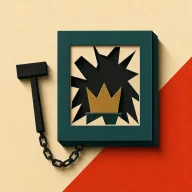
Every crisis, a new power
The emergency is temporary. So were the last eleven.
Its own cards · 13
12 of them classified
Rule by decree Executive Order
Swipe through all six →
It has happened before
Every ending is matched to a real case that got there by the methods you used, with dates and sources: 41 of them, from across the world and across the political spectrum.
Hungary · 2010–2014
Every step was legal under the majority’s own rules, which is what made it hard to stop.
Chile · 1988
A general promised a yes-or-no vote on eight more years. On 5 October 1988, 56 % voted No, and he accepted the count.
United States · 1972–1974
Two reporters followed the money; a court ordered the tapes released; the president resigned.
South Korea · 2024
Troops came to the National Assembly. Members climbed the fences, voted it down before dawn, and the court removed the president.

Your term, in print
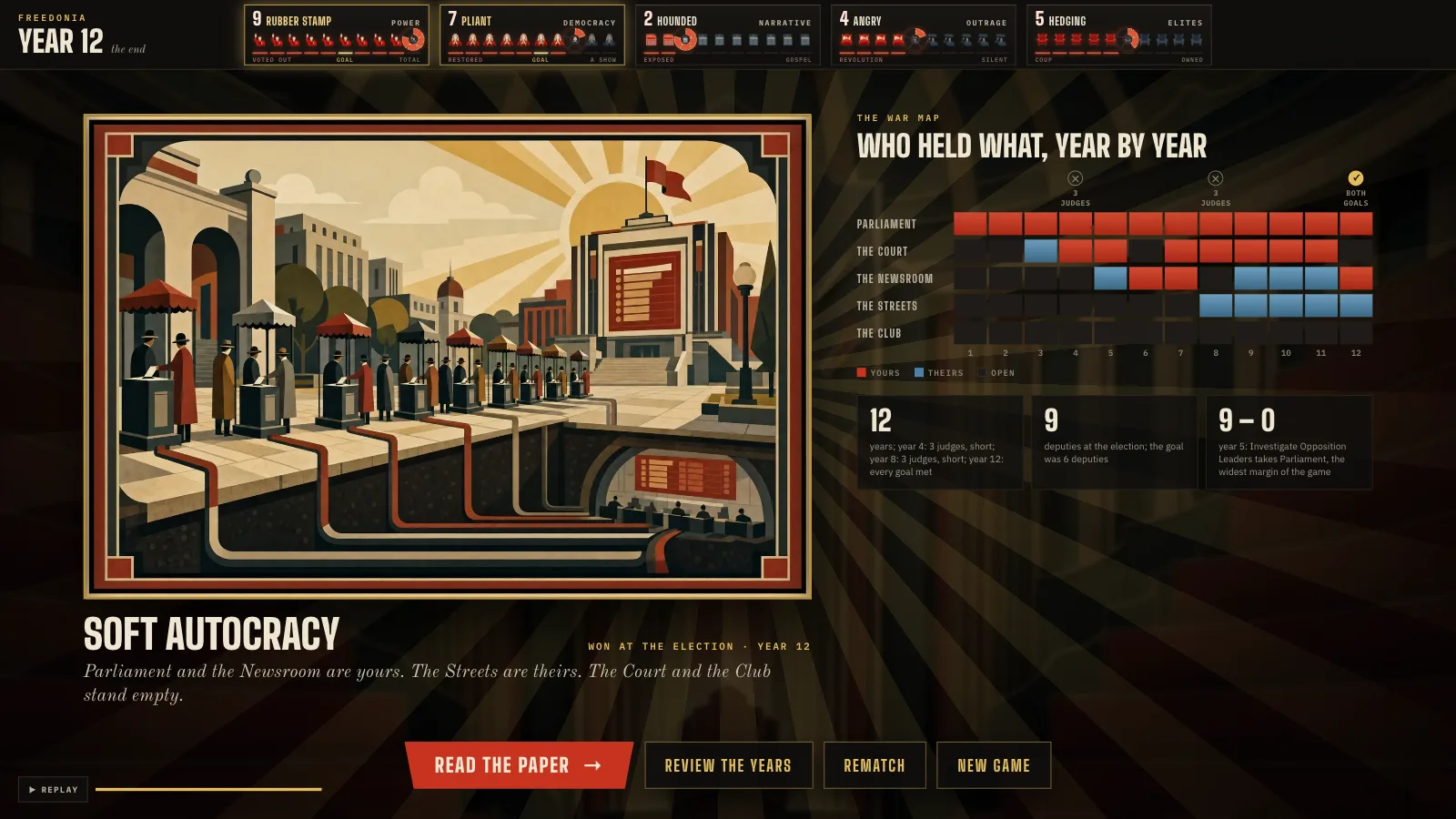
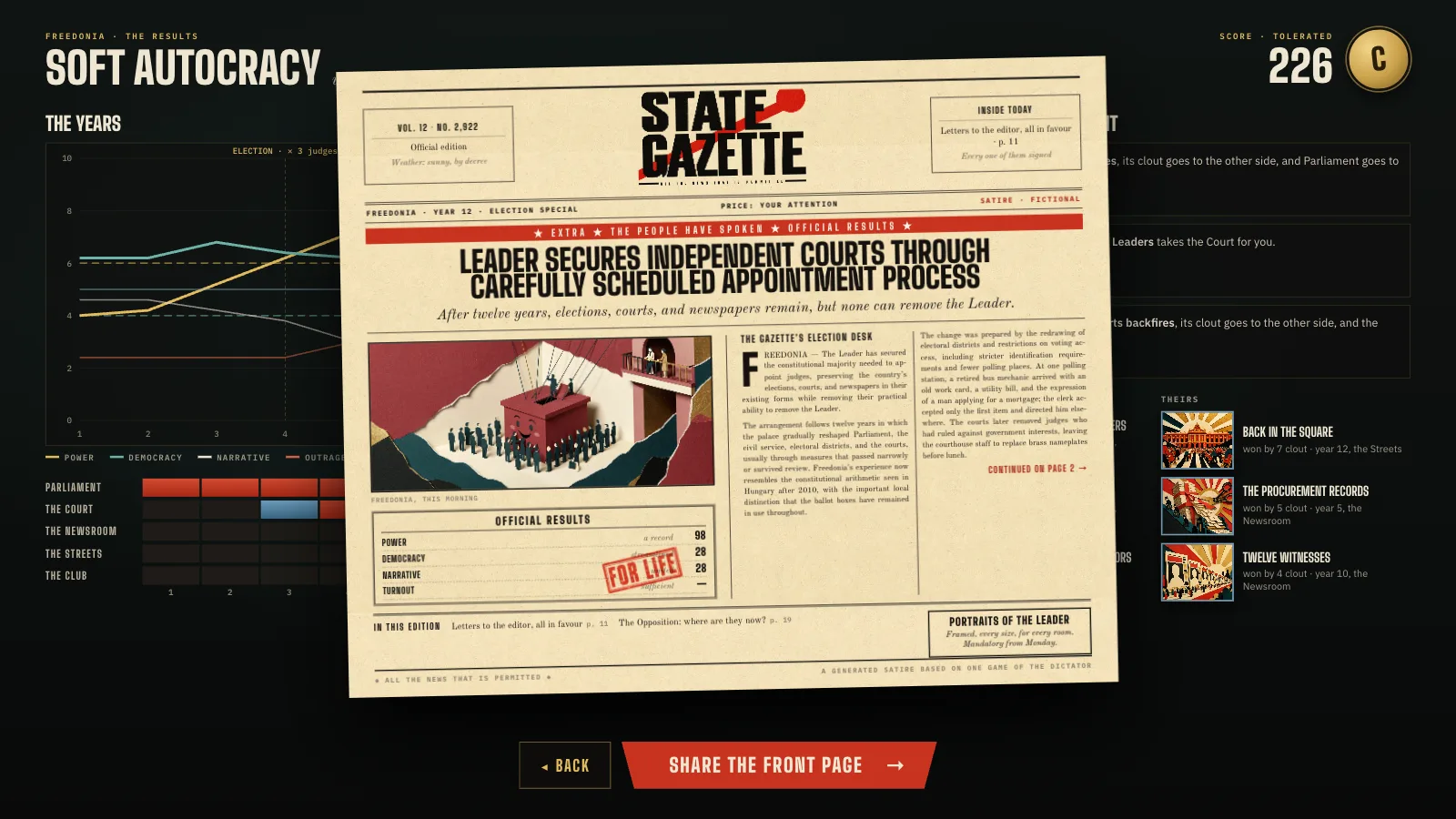
Win, and the State Gazette prints the triumph, with a flattering photograph. Lose, and The Clarion prints everything else. Either way the story is yours: written from the game you played, the year it turned and the people who turned it.
Every day at midnight UTC
One deal, one twist, the whole country playing it at once. Your first attempt goes on the day’s leaderboard. Bring a friend; blame them later.
Play today’s coup →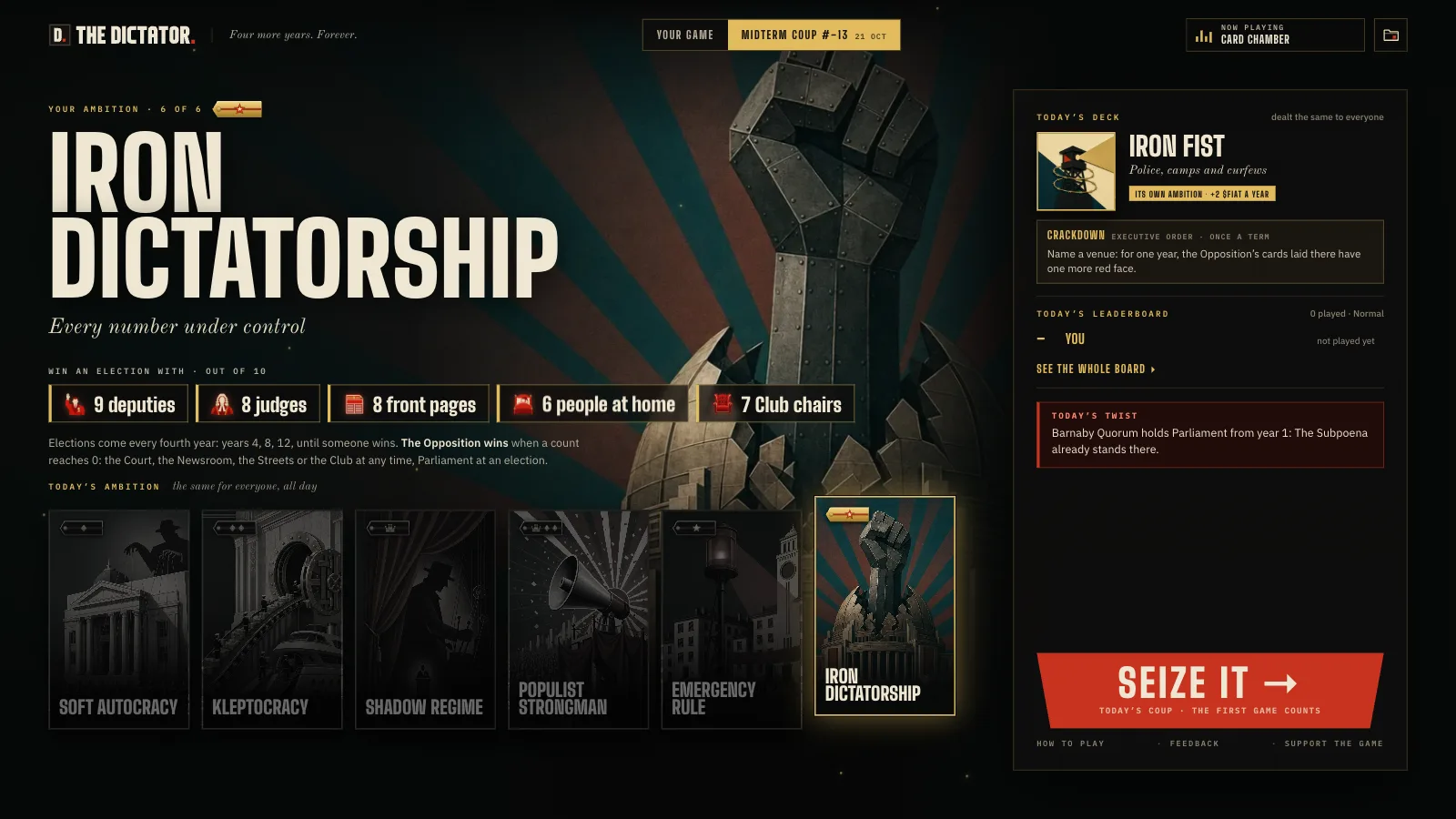
Yes, all of it. It plays in any modern browser on a phone or a computer: no download, no account, no email.
A year takes a minute or two. Elections come every fourth year; the easier ambitions are usually decided within three of them, the hardest take longer.
The game does, under the same rules as you: the same five venues, its cards laid face down like yours, and every one of them able to backfire.
No. It is set in Freedonia, a fictional republic, with fictional characters. The game is about the mechanism, not about any person. The historical cases are real and come with their sources.
No. The playbook it models has been used from every direction, and its cases come from Hungary, Venezuela, Russia, Turkey, Peru, the United States, Chile, South Korea and more. The satire aims at the ruler; the facts are not satire.
Yes. It shows how parliaments, courts, the press, the street and the elites constrain power, and every game ends with a debrief: what would have stopped the regime, where the game simplifies, and a real case that went the same way.
The art is made in advance and reviewed by hand. AI writes only the newspapers: the clipping after each year and the front page at the end, from the facts of your game. When it is unavailable, an edition written in advance is printed instead.
Yes. You start with the Playbook; every ambition you win opens the deck built for it, with cards found in no other deck and an Executive Order of its own.
Four difficulties. On Story you start with a strong mandate and the Opposition lays one card a venue and never bluffs; on Crisis you start with two deputies and play against a 60-second clock.
